
Composite vs Wood Deck: Which Is the Best Deck Material in 2026?
Three summers ago, I stood barefoot on a deck that looked great from the street. From ten feet away, it was perfect. Clean lines. Fresh stain. New railing.
It was the kind of work you expect from a Cincinnati deck builder who knows how to sell the first impression.
Then the heat kicked in.
One board flexed. Another splintered. A screw head popped up just enough to remind me this deck was lying to me.
That moment changed how I think about decking forever.
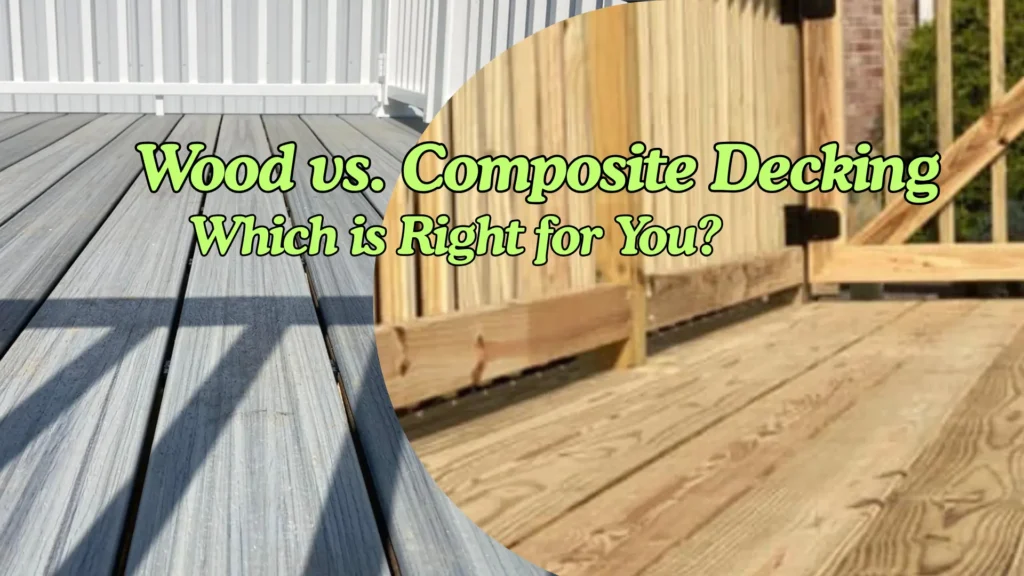
If you’re trying to decide between a composite vs wood deck, this article exists to save you from that exact moment. The regret moment. The “I should’ve known better” moment. The moment where a project you expected to enjoy becomes something you manage.
I’ve built, repaired, paid for, and lived with both. I’ve watched neighbors redo decks after five years. I’ve watched others forget about theirs entirely for fifteen.
This is the full truth. Not the sales pitch. Not the Pinterest fantasy.
Executive Summary
If you want the short answer before the deep dive, here it is.
Composite decks are usually the better long-term investment.
Wood decks are usually the better short-term solution.
That’s the dividing line most articles never draw clearly.
As of 2025, here’s how the two stack up for most homeowners:
- Wood decks
- Lower upfront cost
- Higher ongoing maintenance
- 10–15 year lifespan
- Better for short ownership timelines
- Lower upfront cost
- Composite decks
- Higher upfront cost
- Minimal maintenance
- 25–30 year lifespan
- Better for long-term ownership and resale
- Higher upfront cost
This isn’t theory. It’s pattern recognition from real installs, real repairs, and real replacements.
Later in this guide, we’ll break down:
- Composite deck cost vs wood over 10, 15, and 25 years
- Maintenance time and money most people forget to budget
- Heat concerns and whether they actually matter
- Brand differences including Trex, TimberTech, and Fiberon
- Midwest climate impact on deck lifespan
- Clear pros and cons for each material
But first, we need to ground this conversation in reality.
Which deck will you regret less?
Most homeowners don’t regret decks because of looks. They regret them because of:
- Unexpected maintenance
- Shorter lifespan than promised
- Poor resale perception
- Time investment they didn’t anticipate
A wood deck that costs less today can become more expensive emotionally and financially over time. A composite deck that costs more today can feel like a bargain a decade later.
This guide is built to help you choose based on:
- Your timeline
- Your tolerance for maintenance
- Your climate
- Your resale goals
Not marketing claims.
Who This Guide Is For (And Who It Isn’t)
This article is for homeowners who:
- Are actively choosing between composite decking and wood
- Care about long-term costs, not just install price
- Want honest pros and cons, not sales copy
- Live in climates where weather matters
This is not for:
- People looking for the cheapest possible deck
- Flippers who only care about photos
- Anyone hoping there’s a perfect material with zero downsides
Both materials have tradeoffs. We’re going to surface them clearly.
What Changed My Own Opinion on Composite vs Wood Decks
I didn’t always lean this way.
Years ago, I favored wood decks more often. They felt practical. Familiar. Flexible. And for certain homeowners, they still are.
What changed my mind was repetition.
I watched homeowners maintain wood decks faithfully and still lose ground to moisture. I saw maintenance enthusiasm fade. I saw replacement conversations happen earlier than expected.
Composite decks didn’t eliminate problems. They eliminated entire categories of problems.
That difference matters more than aesthetics or tradition.
Wood Deck vs Composite: Wood Deck Maintenance, Lifespan, and Real Costs in 2026
Wood decks cost less upfront but demand ongoing maintenance, time, and repairs that shorten their lifespan to 10–15 years in most climates.
Now let’s unpack what that actually means in real life.
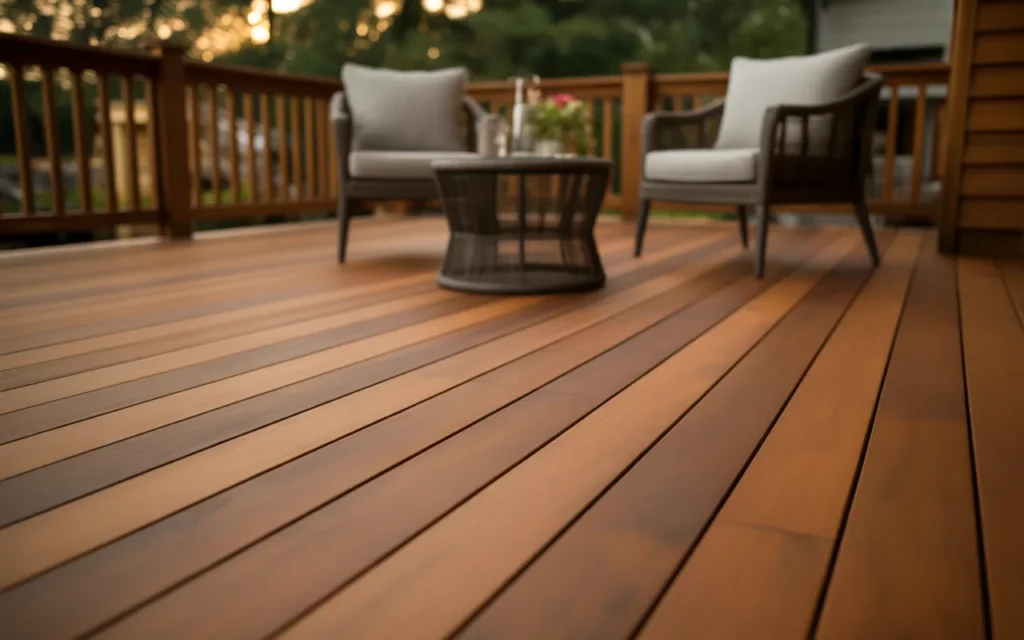
Wood Deck Maintenance: What Homeowners Underestimate Every Time
Most people think they understand wood deck maintenance. They don’t.
They budget for stain. They don’t budget for attention.
A wood deck is not a one-time project. It’s a repeating obligation that shows up every year whether you’re busy, tired, or broke.
In 2026, typical wood deck maintenance looks like this:
- Annual cleaning to remove mildew, pollen, and grime
- Staining or sealing every 1–2 years
- Periodic sanding to address splintering
- Board replacement every 6–10 years in high-stress areas
- Fastener tightening as boards expand and contract
None of this is catastrophic. But it is relentless.
The biggest mistake homeowners make is assuming motivation stays constant. It doesn’t. Life gets louder. Maintenance gets postponed. And wood decks punish postponement quietly.
Wood Deck Lifespan: Expectations vs Reality
On paper, wood decks are often advertised as lasting 15–20 years.
In practice, 10–15 years is far more common in climates with:
- Humidity
- Rain-heavy springs
- Freeze-thaw cycles
- Large seasonal temperature swings
The failure rarely happens all at once.
It starts underneath stairs where snow sits longest. Around ledger boards where moisture gets trapped. Near railing posts where fasteners loosen. By the time rot is visible, structural integrity has already been compromised.
This is why wood deck lifespan is not just about material quality. It’s about maintenance consistency, and that’s the variable most homeowners overestimate.
Wood Deck Cost in 2026: The Numbers People Avoid Adding Up
Let’s talk real cost, not just install price.
As of 2026, typical installed costs look like this:
- Pressure-treated wood deck: $15–$25 per square foot installed
But that’s just the opening number.
Over 10 years, most homeowners also spend:
- $300–$700 per maintenance cycle
- 4–8 weekends of personal labor or paid help
- $800–$1,500 in board and fastener replacements
By year 12 to 15, many wood decks reach a decision point:
- Heavy repair
- Or full replacement
This is where wood decks often lose the cost advantage people assume they have.
Wood Deck Pros and Cons (Explicit, No Marketing)
Wood Deck vs 🧱 Composite Deck
| Wood Deck | Composite Deck |
|---|---|
| Lower upfront cost | Higher upfront cost |
| Needs staining & sealing | No staining or sealing |
| 10–15 year lifespan | 25–30 year lifespan |
| Splinters & warps | No splinters or warping |
| Cooler underfoot | Can retain heat |
| Higher long-term stress | Low mental load |
Wood Deck Advantages
- Lower upfront cost than composite
- Natural grain and traditional appearance
- Easy to customize, cut, and modify
- Paint and stain flexibility
- Lower surface heat in direct sun
Wood Deck Disadvantages
- High ongoing maintenance requirements
- Shorter lifespan, especially in wet climates
- Susceptible to rot, insects, and moisture damage
- Splintering and warping over time
- Maintenance neglect leads to accelerated failure
Wood decks are not bad. They’re honest. They tell you exactly what they need. The problem is most people stop listening.
When a Wood Deck Is Still the Right Choice
Despite everything above, wood is still the best option in specific scenarios.
Choose a wood deck if:
- You plan to sell within 3–7 years
- Budget constraints outweigh long-term convenience
- You enjoy hands-on maintenance
- You want maximum design flexibility
- You’re building for aesthetics more than longevity
Wood decks work best when treated as short- to medium-term assets, not forever structures.
The regret happens when homeowners expect wood to behave like composite without giving it composite-level attention.
The Hard Truth About Wood Deck Regret
Most wood deck regret doesn’t come from failure.
It comes from fatigue.
Homeowners don’t wake up one day and hate their deck. They slowly stop wanting to deal with it. That emotional shift matters more than material specs.
This is why so many composite replacements start with the same sentence:
“I just don’t want to deal with this anymore.”
Composite Deck Pros and Cons: Cost, Heat, Brands, and Performance in 2026
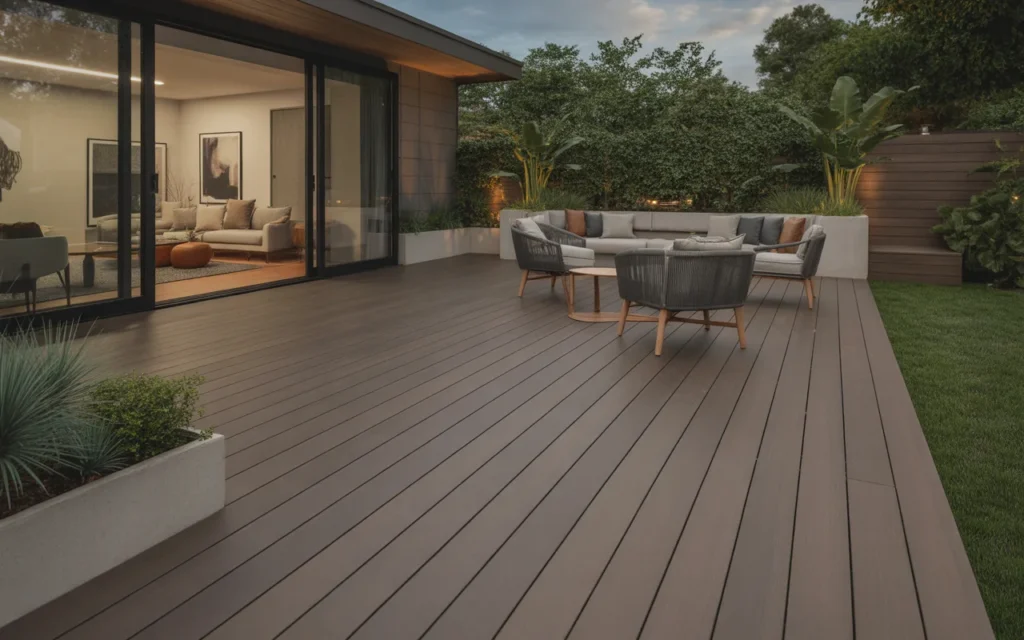
Composite decks cost more upfront but last 25–30 years with minimal maintenance, making them the better long-term choice for most homeowners in 2026.
Now let’s get into the parts most articles soften or skip
Composite Decking Explained (Without the Marketing)
Composite decking is made from a blend of recycled wood fibers and polymers. Modern boards are capped, meaning the outer shell resists moisture, fading, staining, and mold.
This matters because early-generation composite earned a bad reputation. It faded. It scratched easily. It looked plastic. That version still lives in people’s heads.
2026 composite decking is not that product.
The core advantage of composite isn’t appearance. It’s stability. The boards don’t absorb water, don’t swell and shrink the same way wood does, and don’t create maintenance deadlines.
That changes how decks age.
Composite Deck Cost vs Wood in 2026: Real Numbers
Let’s anchor this in current pricing.
As of 2026:
- Composite decking installed: $30–$45 per square foot
- Wood decking installed: $15–$25 per square foot
That price gap scares people. It shouldn’t be ignored, but it should be contextualized.
Over 10 years, composite typically adds:
- $50–$150 per year in cleaning
- No staining costs
- No board replacement
- No structural moisture repair
Over 25 years, most composite decks are still structurally sound. Most wood decks are not.
This is why composite deck cost vs wood flips when ownership extends beyond a decade. Composite front-loads cost. Wood back-loads it.
Homeowners who stay long-term almost always say the same thing in hindsight.
“The composite deck would have been cheaper if we’d done it first.”
Composite Deck Pros and Cons (Clear and Explicit)
Composite Deck Advantages
- 25–30 year lifespan with minimal upkeep
- No staining, sealing, or sanding
- Resistant to rot, mold, insects, and moisture
- Consistent appearance year after year
- Strong resale appeal in 2026
Composite Deck Disadvantages
- Higher upfront cost than wood
- Can retain heat in direct sunlight
- Limited ability to repaint or restain
- Harder to modify after installation
- Not ideal for short-term ownership
Composite decks are not perfect. They are predictable. And predictability is valuable.
Do Composite Decks Get Too Hot? The Real Answer
Yes, composite decks can get hotter than wood in direct sun. This is real. It’s also manageable.
Heat becomes an issue when three conditions overlap:
- Dark-colored boards
- Full, unshaded sun
- Barefoot use during peak afternoon hours
Change any one of those and complaints drop fast.
In practice, homeowners mitigate heat by:
- Choosing lighter board colors
- Adding pergolas or shade sails
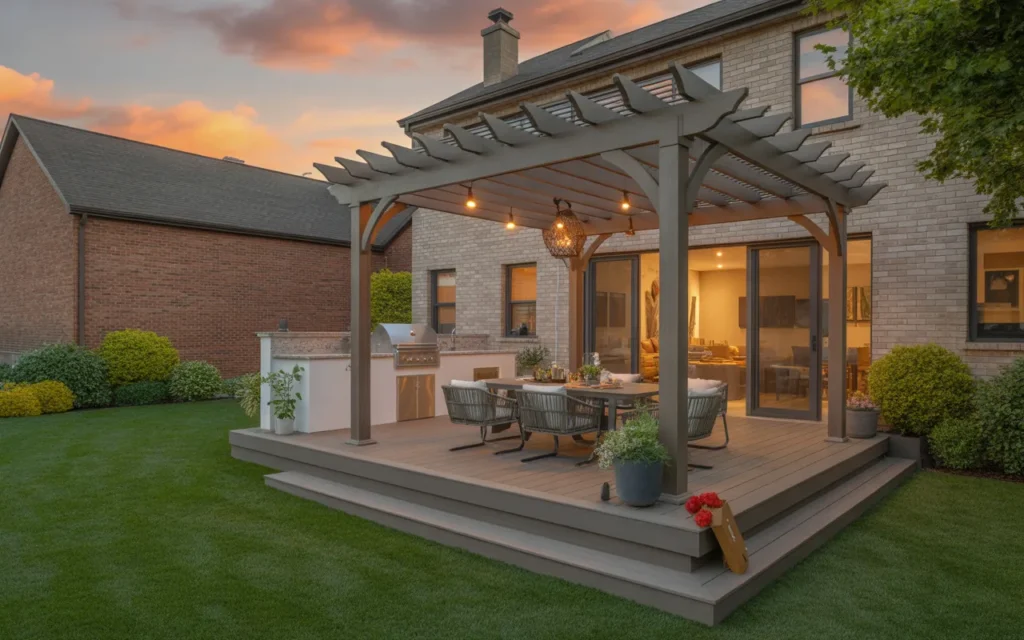
- Using outdoor rugs in traffic zones
Heat is an inconvenience. Rot is a structural failure. One is easier to solve than the other.
Composite Deck Maintenance Reality
Composite is often marketed as “maintenance-free.” That’s not accurate, but it’s close.
Realistic upkeep looks like:
- Seasonal rinsing
- Occasional soap-and-water cleaning
- Removing debris from gaps
No chemical treatments. No weather watching. No pressure to act on a calendar.
Over time, this difference compounds emotionally. Composite decks don’t demand attention. They simply exist.
That’s why they align so well with modern lifestyles.
Composite Deck Brands That Actually Matter in 2026
Not all composite decking performs the same. Brand differences show up years later, not on install day.
Three names dominate homeowner searches and contractor installs:
- Trex
Known for wide availability, solid warranties, and consistent performance. Mid-range pricing with good long-term reliability. - TimberTech
Higher-end aesthetics, thicker caps, and strong fade resistance. Often costs more but shows it in finish quality. - Fiberon
Competitive pricing, good color stability, and solid eco credentials. A strong value option when installed correctly.
Cheap composite often cuts corners in core density or cap thickness. Those savings show up later as fading, surface wear, or warranty disputes.
Composite rewards buying quality once. It punishes bargain hunting.
When Composite Decking Is the Wrong Choice
Composite is not for everyone.
Avoid composite if:
- You plan to sell within 3–5 years
- Budget constraints are strict
- You want frequent design changes
- You prefer paintable or stainable surfaces
I’ve seen homeowners stretch financially for composite, then resent the deck because it delayed other priorities. That’s a mismatch, not a failure of the material.
Composite works best when the homeowner’s timeline matches its lifespan.
The Composite Deck Pattern That Keeps Repeating
After five years, composite decks rarely generate complaints.
After five years, wood decks often generate decisions.
That difference is the entire debate.
Wood vs Composite Deck Cost Comparison: 10-Year, 15-Year, and 25-Year Math (2026)
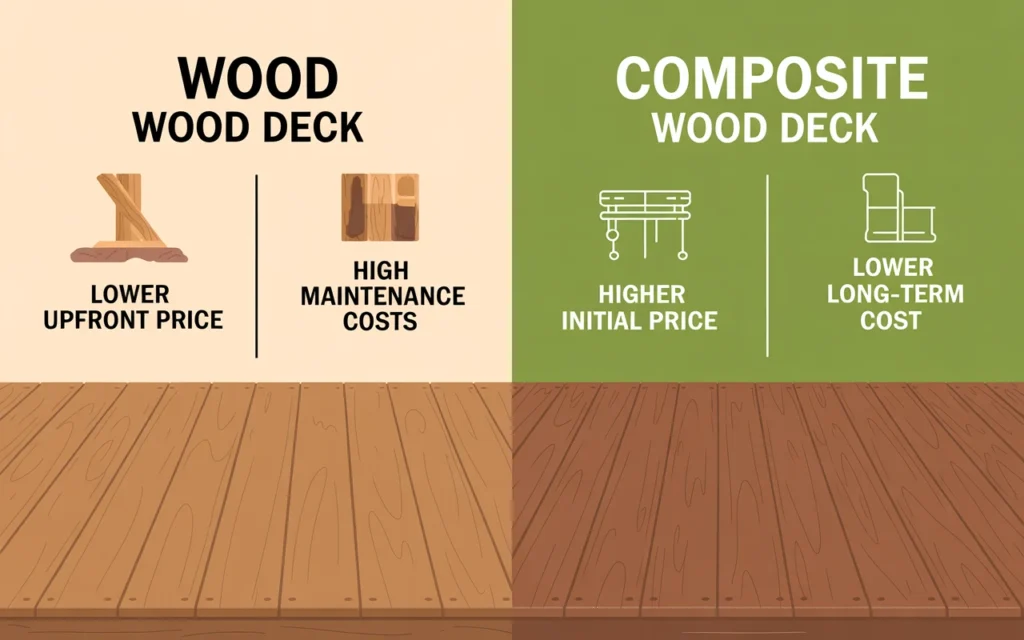
Short Answer for Voice Search
Wood decks cost less to build but more to own. Composite decks cost more to build but less to live with over time.
This section is where opinions stop and math takes over.
The Cost Mistake Almost Everyone Makes
Most homeowners compare install quotes instead of ownership costs.
That’s understandable. Install quotes are tangible. Maintenance feels optional. Replacement feels hypothetical. Until it isn’t.
In climates like Cincinnati and much of the Midwest, moisture, freeze-thaw cycles, and temperature swings compress timelines. Materials age faster. Maintenance matters more. And cost curves change sooner than people expect.
So let’s run the numbers the way homeowners actually experience them.
Side-by-Side Cost Comparison (2026)
Below is a realistic comparison for a 12×16 deck (192 sq ft) using average Midwest pricing.
Initial Installation Cost
- Wood deck: $2,900–$4,800
- Composite deck: $5,800–$8,600
At install, wood looks like the clear winner. This is where most decisions stop. That’s the mistake.
Deck Cost Comparison (2026 Reality Check)
10-Year Ownership Cost
| Material | Initial Build | Maintenance & Repairs | Total (10 Years) |
|---|---|---|---|
| Wood Deck | $2,900 – $4,800 | $2,400 – $4,200 | $5,300 – $9,000 |
| Composite Deck | $5,800 – $8,600 | $500 – $1,200 | $6,300 – $9,800 |
15-Year Ownership Cost
| Material | Total Build & Maintenance | Major Repairs | Total (15 Years) |
|---|---|---|---|
| Wood Deck | $5,600 – $9,300 | $1,200 – $2,500 | $6,800 – $11,800 |
| Composite Deck | $6,600 – $10,400 | $0 | $6,600 – $10,400 |
25-Year Ownership Cost
| Material | Number of Rebuilds | Lifetime Cost |
|---|---|---|
| Wood Deck | 2 full builds | $12,000 – $20,000+ |
| Composite Deck | 1 build | $7,500 – $11,500 |
Maintenance Time: The Hidden Cost Nobody Calculates
Money is only half the equation. Time matters more than people admit.
Over 15 years, homeowners typically spend:
- Wood deck: 120–180 hours cleaning, sanding, staining, and repairing
- Composite deck: 20–40 hours total
That’s weeks of free time returned. Not in theory. In practice.
This is why people describe composite decks as “stress-free.” They don’t consume attention.
Resale Psychology in 2026
Decks don’t always raise appraised value dollar-for-dollar. But they influence buyer behavior.
Wood decks raise questions:
- When was it last stained
- How much life is left
- What will I need to fix
Composite decks answer those questions quietly.
In 2026, buyers increasingly favor:
- Low-maintenance features
- Predictable ownership costs
- Turnkey outdoor spaces
Composite aligns with that mindset. Wood often triggers negotiation.
The Decision Framework That Actually Works
Use this instead of guessing.
Choose wood if:
- You’ll sell within 3–7 years
- You accept ongoing maintenance
- You want the lowest upfront cost
Choose composite if:
- You’ll stay 10+ years
- You value time and predictability
- You want minimal future decisions
If you’re undecided, ask one question:
Do I want to deal with this deck again in five years?
Your answer is your material.
Composite vs Wood Deck
In 2026, composite decking is the better choice for most long-term homeowners, while wood decking still makes sense for short-term ownership and tight budgets.
This is where we stop comparing and start deciding.
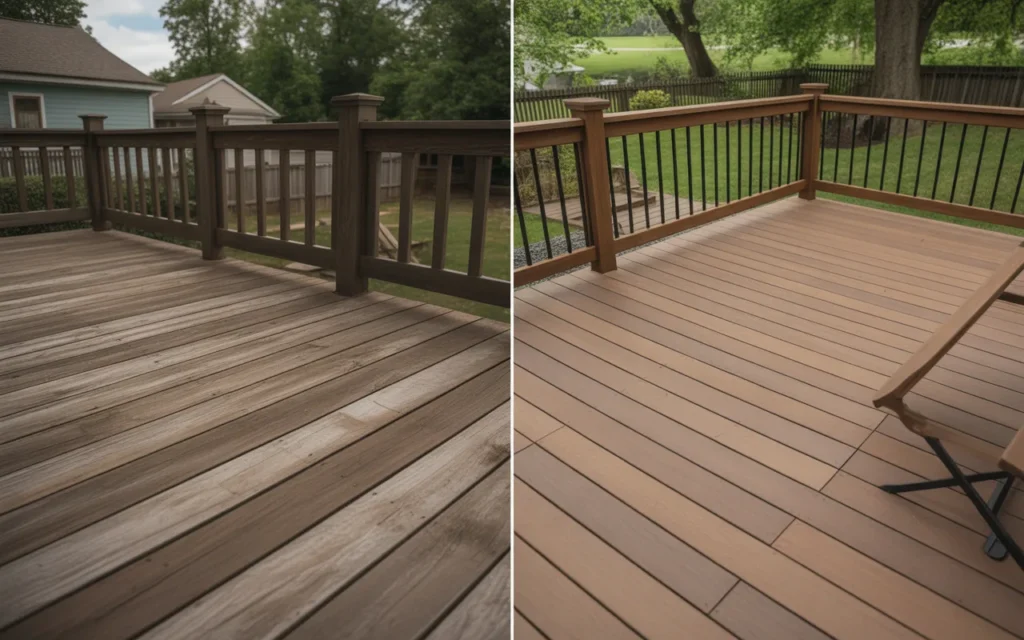
If there’s one takeaway from this entire composite vs wood deck comparison, it’s this:
The “best deck material” depends less on taste and more on time horizon.
Composite decking wins when:
- You plan to stay in your home 10 years or more
- You want predictable costs
- You don’t want maintenance dictating your weekends
- You care about resale perception in 2026 and beyond
Wood decking wins when:
- You plan to sell within 3–7 years
- Upfront cost is the dominant constraint
- You enjoy hands-on maintenance
- You want maximum flexibility in design and finishes
Most regret comes from choosing wood for a long-term lifestyle or choosing composite for a short-term plan. Match the material to your timeline and regret disappears.
What I Would Choose (And Why)
If this were my own house and I planned to live there long-term, I would choose composite decking without hesitation.
I would:
- Choose a lighter board color
- Add shade where possible
- Invest in a proven brand like Trex or TimberTech
- Build it once and move on
If I knew I was selling within five years, I would choose wood, maintain it aggressively, and treat it as a cosmetic asset rather than a permanent structure.
Neither choice is wrong. The wrong move is pretending the two options age the same way.
FAQs
Which lasts longer: a composite deck or a wood deck?
Composite decks typically last 25–30 years with minimal maintenance. Wood decks usually last 10–15 years, even with consistent staining and repairs. Over 25 years, many homeowners replace wood decks twice.
Is composite decking really worth the extra cost?
For long-term homeowners, yes. While composite costs more upfront, the lack of staining, repairs, and replacement often makes it cheaper over 15–25 years. For short-term ownership, wood can still be the better financial choice.
What are the disadvantages of composite decking?
The main disadvantages are:
- Higher upfront cost
- Heat retention in direct sunlight
- Limited ability to repaint or restain
- Less flexibility for post-install modifications
These drawbacks matter most for short-term or budget-constrained projects.
Do composite decks get too hot to walk on?
Composite decks can get hotter than wood in direct sun, especially darker colors. Lighter boards, shade structures, and outdoor rugs significantly reduce this issue. In most real-world setups, heat is manageable.
Which is better: Trex or a wood deck?
Trex outperforms wood in lifespan, maintenance, and moisture resistance. Wood can still be preferable for short-term ownership, customization, or lower upfront cost.
Does a composite deck increase home value?
Composite decks don’t always raise appraised value dollar-for-dollar, but they reduce buyer objections and maintenance concerns. In 2026, that often translates into faster sales and stronger offers.
Can you replace wood deck boards with composite?
Yes, in many cases. The existing frame must be structurally sound and properly spaced. A professional inspection is critical before retrofitting composite boards onto a wood frame.
The One Question That Ends the Composite vs Wood Debate
When homeowners feel stuck, I ask one question:
Do you want to think about this deck again in five years?
If the answer is no, composite decking is almost always the right choice.
If the answer is yes, wood may still fit your lifestyle.
That question cuts through marketing, trends, and opinions fast.
Final Thought
Decks fail less often because of bad materials and more often because of mismatched expectations.
Wood requires commitment. Composite requires patience upfront.
Choose the material that aligns with how long you plan to live with the decision, not how good it looks on day one.
If you do that, you won’t regret the deck you build. And that’s the only metric that actually matters.