
How to Maintain a Deck So It Lasts Decades (Not Just a Few Seasons)

Three summers ago, I stepped onto a deck that looked flawless. Fresh stain. Clean boards. New furniture lined up like a showroom photo. Two weeks later, a soft spot appeared near the stairs. By fall, that soft spot turned into rot that required partial replacement — something experienced deck builders Cincinnati see far too often. The owner had followed every popular maintenance tip they found online.
Here’s what nobody likes to admit. Most decks fail because of well-intentioned maintenance, not neglect.
People clean when they should inspect. They stain when the wood is still wet. They trust “maintenance-free” materials to protect themselves. I made the same mistakes early on. I once pressure washed a deck too aggressively, convinced I was doing it right. I shortened its lifespan by years in one afternoon.
Deck maintenance has changed. Pressure-treated lumber behaves differently than it did a decade ago. Composite decks reduce some risks but introduce others. Weather patterns are harsher. Sun exposure is stronger. Freeze-thaw cycles punish small errors.
The difference between a deck that lasts 12 years and one that lasts 25 is rarely money. It is timing, restraint, and knowing when not to act.
This guide is not about doing more work. It is about doing the right work, at the right moment, for the right reason.
Executive Summary
Deck maintenance is not about constant work. It is about timely attention.
Most homeowners think maintaining a deck means cleaning it once a year and restaining when it looks dull. That belief costs people boards, fasteners, and sometimes entire structures. I believed it too, until I started seeing the same failures repeat. Rot near stairs. Loose rail posts. Boards that looked fine from above and crumbled underneath.
Here is the truth. A deck that lasts decades is not maintained more often. It is maintained more intelligently.
In this guide, you will learn how to maintain a deck based on how materials actually age, how weather actually damages wood and composite, and how small decisions quietly compound over time. You will see why pressure washing too hard is worse than skipping a year. You will learn why staining at the wrong time does more harm than good. You will also see why so called maintenance free decks still fail when ignored.
I will share mistakes I made, repairs I wish I had done earlier, and simple habits that saved homeowners thousands. You will get clear timelines, realistic expectations, and a maintenance system that fits into real life, not a weekend fantasy.
This guide covers wood and composite decks, seasonal care, inspection routines, product choices, and when to stop fixing and start planning replacement. What it does not do is push constant products or unnecessary work.
If your goal is to protect your deck, your budget, and your peace of mind, this is where to start.
What Does “Deck Maintenance” Actually Mean?
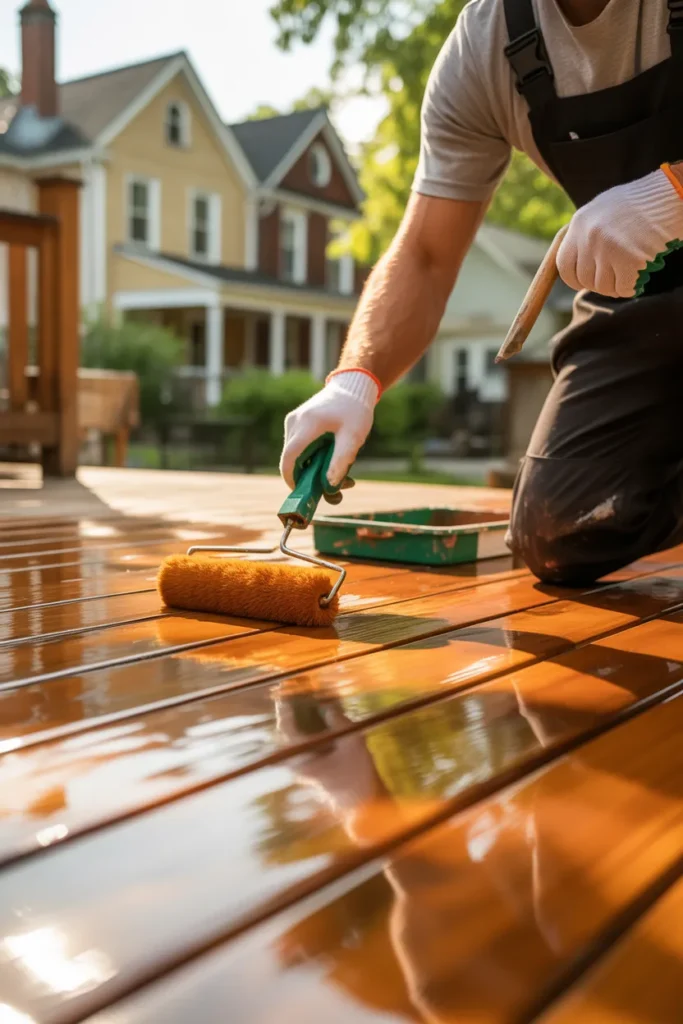
Here’s what nobody explains clearly. Deck maintenance is not one task. It is four different responsibilities that most homeowners lump together. When those get mixed up, damage starts quietly.
Deck maintenance really means:
- Inspecting for problems before they spread
- Cleaning without weakening materials
- Protecting surfaces at the right time
- Repairing small failures before they become structural
Staining alone is not maintenance. Cleaning alone is not maintenance. Even sealing alone is not maintenance. Those are tools. Maintenance is the system that decides when to use them.
I learned this the hard way. Years ago, I kept a deck spotless. I washed it every spring. I stained it every other year. What I did not do was inspect fasteners or check the ledger area. By the time I noticed movement, moisture had already done its work underneath. The deck looked great. The structure was failing.
That is how most decks die. Quietly. From below.
Maintenance vs restoration
Maintenance keeps a healthy deck healthy. Restoration tries to save one that is already declining.
If boards are soft, fasteners are pulling out, or rail posts move under pressure, you are no longer maintaining. You are repairing. Treating repairs like maintenance wastes money because protection products cannot reverse damage.
The earlier you shift from reaction to prevention, the cheaper deck ownership becomes.
Why new decks still need maintenance
This surprises people. A new deck is most vulnerable in its first two years.
Fresh lumber holds moisture. Fasteners settle. Boards move as they dry. Skipping early inspections allows small gaps and movement to become long-term problems.
New does not mean stable. It means unfinished aging.
How neglect actually starts
Neglect rarely looks like abandonment. It looks like good intentions.
People wait for visible dirt. They wait for fading. They wait for peeling. By then, water has already found entry points. Maintenance should happen before symptoms appear.
That shift in mindset changes everything.
How Often Should You Maintain a Deck?

Short, honest answer: deck maintenance is not about fixed schedules. It is about conditions.
Most advice online tells you to maintain your deck “once a year” or “every two years.” That sounds helpful. It is not. Decks fail because weather, usage, and material age do not follow calendars.
I used to follow a strict annual routine. Spring clean. Fall check. It felt responsible. It also caused me to miss problems that showed up mid-season, when damage actually started. That experience changed how I think about timing.
A smarter approach separates inspection frequency from maintenance actions.
Monthly visual checks matter more than yearly projects
Once a month, take five minutes and walk your deck slowly.
You are not cleaning. You are looking.
Check for:
- Boards that feel soft underfoot
- Fasteners backing out
- Rail posts that move when pushed
- Dark staining near joints or stairs
Most early damage announces itself quietly. A slight bounce. A faint creak. A color change near fasteners. Catching these early prevents expensive repairs later.
This habit alone does more for deck lifespan than any product.
Seasonal maintenance priorities explained simply
Each season stresses decks differently.
Spring
- Inspect for winter damage
- Clean only if buildup is present
- Check fasteners after freeze-thaw cycles
Summer
- Monitor heat-related movement
- Watch for splintering or surface cracking
- Spot-clean spills instead of full washes
Fall
- Clear debris from gaps and corners
- Inspect drainage paths
- Prepare for moisture and leaf buildup
Winter
- Avoid metal shovels
- Limit salt use
- Do not trap moisture under furniture or mats
Maintenance follows stress. Not dates.
When doing nothing is the right move
This feels wrong to many homeowners, but it matters.
Over-maintenance causes damage. Repeated washing strips fibers. Unnecessary sealing traps moisture. Touching a deck too often can shorten its life.
If your deck is clean, dry, and stable, leave it alone.
Restraint is a maintenance skill.
My rule of thumb after years of trial and error
Inspect monthly.
Clean when needed.
Protect when conditions are right.
Repair immediately when something changes.
That rhythm keeps decks strong without turning maintenance into a burden.
The Biggest Deck Maintenance Mistakes Homeowners Make
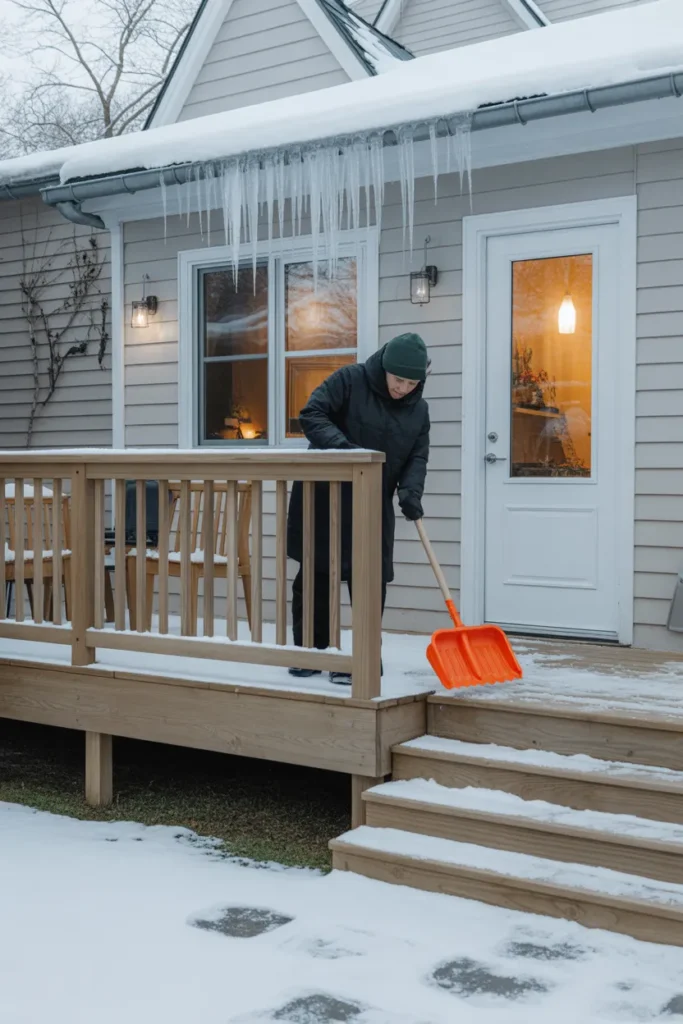
Here’s what nobody likes hearing. Most deck damage is self-inflicted.
Not through neglect, but through enthusiasm. People try to be responsible. They just follow bad advice. I have made every mistake on this list at least once, which is why I’m confident about it now.
Overwashing the deck
Pressure washers destroy more decks than rot.
That sounds dramatic. It is still true.
I once watched someone “clean” a deck by blasting it until the grain lifted and fuzzed. It looked bright. It also absorbed water like a sponge afterward. Within two seasons, boards that should have lasted years started checking and cracking.
Water pressure strips wood fibers. Once those fibers are gone, stain cannot protect what is left.
If dirt does not come off with light pressure and a brush, the deck does not need more force. It needs patience or a different cleaner.
Staining too often or at the wrong time
This one hurts budgets.
Staining a deck too soon after cleaning traps moisture. Staining too often builds layers that peel. Peeling exposes wood faster than leaving it alone.
I used to believe more protection was better. It is not.
Wood needs to breathe. If stain goes on before moisture levels stabilize, you seal in the problem you are trying to prevent.
If stain is failing, it is often because it was applied too early, not too late.
Ignoring fasteners and connections
Deck boards get all the attention. Hardware gets ignored.
That is backwards.
Loose screws, corroded fasteners, and shifting connectors cause movement. Movement opens gaps. Gaps invite water. Water invites decay.
I have seen decks fail structurally while boards still looked acceptable. The damage was underneath, where nobody looked.
Fasteners are the skeleton. Boards are just skin.
Believing “maintenance-free” claims
This is the most expensive myth.
Composite decks still need maintenance. Railings still loosen. Debris still traps moisture. Mold still grows in shaded areas.
People hear “maintenance-free” and stop paying attention. That is when problems start.
Low maintenance does not mean no maintenance. It means different maintenance.
Cleaning when inspection was needed
This is subtle but common.
People clean because they want visible results. Inspection feels boring. But inspection finds problems before cleaning makes them worse.
I now inspect first, clean second, protect last. That order matters.
The mistake behind all the others
Rushing.
Most deck mistakes come from trying to finish in one weekend. Maintenance rewards slow observation, not speed.
When people say “I just wanted to get it done,” that is usually when damage starts.
The takeaway that changes behavior
Deck maintenance is not about effort. It is about judgment.
Doing the wrong thing perfectly still causes failure.
How to Inspect Your Deck Properly
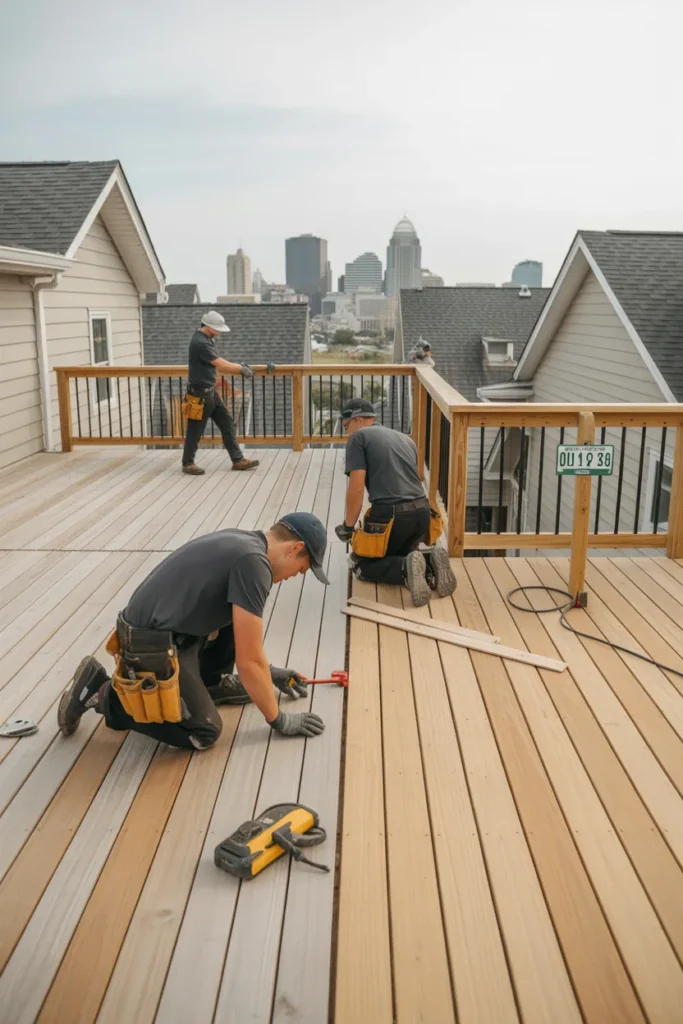
A Step by Step Method That Catches Problems Early
Straight answer: a good deck inspection is slow, quiet, and slightly boring. That is why it works.
Most people inspect decks the way they check a car tire. Quick glance. Looks fine. Move on. That misses almost everything that matters.
I learned this after missing early rot on a ledger board years ago. The surface looked solid. The connection was not. That repair cost far more than it should have because I trusted appearances.
A proper inspection takes about 15 minutes and requires no tools beyond your hands, eyes, and attention.
Step 1: Walk the deck barefoot or in soft shoes
This sounds odd. It is effective.
Pay attention to:
- Soft or spongy spots
- Subtle dips near stairs
- Areas that feel different under weight
Your feet detect problems before your eyes do. Any change in feel deserves a closer look.
If a board compresses even slightly, moisture is already involved.
Step 2: Check boards where water lingers
Rot does not start in the middle of boards. It starts where water pauses.
Focus on:
- Ends of boards
- Gaps near rail posts
- Areas under furniture or planters
- Shaded corners that stay damp
Press down with your thumb. Solid wood resists. Compromised wood gives.
This step alone catches most early failures.
Step 3: Inspect fasteners and hardware closely
Fasteners fail before boards do.
Look for:
- Screws backing out
- Rust or corrosion
- Missing fasteners
- Joist hangers pulling away
Grab rail posts and apply pressure. If anything moves, that movement will get worse with time.
Movement is not cosmetic. It is structural.
Step 4: Examine the ledger board area
This is the most important and most ignored part of the deck.
Check:
- Flashing condition
- Signs of water staining
- Soft wood where the deck meets the house
If moisture is trapped here, damage spreads fast and stays hidden. Many deck failures begin at the ledger and are discovered too late.
If you are unsure about this area, slow down and inspect again.
Step 5: Inspect stairs and transitions
Stairs fail earlier than flat decking.
Pay attention to:
- Cracks near tread ends
- Loose stringers
- Wobbling handrails
Stair movement is an early warning sign. Ignore it and repairs multiply.
What inspectors look for that homeowners miss
Professional inspectors focus on connections, not surfaces.
They watch:
- Load transfer points
- Fastener spacing
- Guardrail strength
If you inspect those same areas, you catch most problems before they escalate.
How often this inspection should happen
Once every spring.
Once every fall.
And anytime something feels different.
No tools. No products. Just awareness.
The core insight
A clean deck can still be unsafe.
A slightly dirty deck can be perfectly healthy.
Inspection protects structure. Cleaning protects appearance. Never confuse the two.
Cleaning a Deck Without Damaging It
Clear truth: most decks are cleaned too aggressively, too often, or for the wrong reason.
Cleaning feels productive. It gives instant visual payoff. That is exactly why people overdo it. I did for years. I treated cleaning like maintenance when it is really just preparation.
A clean deck that has lost wood fibers is worse off than a slightly dirty one that is still structurally sound.
When a deck actually needs cleaning
Your deck needs cleaning only when buildup interferes with drying or inspection.
That usually means:
- Pollen that cakes between boards
- Algae or mildew that stays damp
- Food spills or grease spots
- Mud tracked into corners or stairs
Faded color alone is not a reason to clean. Dirt that dries quickly is not a threat. Moisture that lingers is.
If water still beads and drains after rain, cleaning can wait.
The safest way to clean a deck
Gentle methods protect wood fibers and composite surfaces.
Start with:
- A stiff nylon brush, not wire
- Mild detergent or oxygen cleaner
- Low water pressure
Work with the grain. Let cleaners do the work. Rushing causes damage.
If scrubbing feels like hard labor, stop. Something is wrong with the approach.
Pressure washer reality check
Pressure washers are not evil. They are misused.
Safe rules that prevent damage:
- Keep pressure under 1,200 PSI
- Use a wide fan tip
- Stay at least 12 inches from the surface
- Never linger in one spot
If wood fibers lift or fuzz, stop immediately. That damage cannot be undone.
I shortened a deck’s lifespan by years in one afternoon by ignoring this rule. That lesson stuck.
Composite decks need cleaning too
Composite decks resist rot. They do not resist dirt.
Clean composites when:
- Mold appears in shaded areas
- Grease stains develop
- Pollen buildup traps moisture
Avoid harsh chemicals. Avoid wire brushes. Avoid excessive heat.
Composite surfaces scratch easily and show damage longer than wood.
Rinsing matters more than soap
Leaving cleaner residue attracts dirt faster.
Always rinse thoroughly. Then allow the deck to dry completely before replacing furniture or mats.
Trapped moisture causes more damage than dirt ever will.
How often cleaning should happen
Most decks need:
- Light cleaning once per year
- Spot cleaning as needed
If you are cleaning more often than that, ask why. Overcleaning is usually a response to appearance anxiety, not real maintenance needs.
The insight that changes behavior
Cleaning prepares a deck for inspection or protection.
It does not protect the deck by itself.
When cleaning becomes routine instead of purposeful, damage follows.
Deck Cleaning Products and Tools That Actually Work
Honest truth: most deck damage is caused by tools, not dirt.
People assume stronger products mean better results. In reality, the safest products used consistently outperform aggressive cleaners used once. I learned this after ruining the surface of a deck with a heavy-duty cleaner that promised “restoration in minutes.” It worked. It also stripped protection that should have lasted years.
Here’s what actually works in real conditions.
The only cleaning categories you really need
You do not need a shelf full of products. You need the right category for the problem.
Mild detergent
Best for routine cleaning and pollen buildup.
Safe for wood and composite.
Low risk when used correctly.
This is my default choice when nothing is visibly wrong.
Oxygen-based cleaners
Useful for mildew, algae, and organic stains.
Gentler than chlorine bleach.
Effective when given time to work.
These cleaners require patience. Rushing them leads people to scrub too hard and cause damage.
Targeted degreasers
Only for food or grill grease.
Use sparingly.
Rinse thoroughly.
Grease is one of the few cases where spot treatment beats full cleaning.
Products I trust and why
I am selective because I have seen failures.
- Simple Green
Reliable for light cleaning. Low residue. Hard to misuse. - Defy
Oxygen-based formulas that clean without eating wood fibers. - Olympic
Not perfect, but consistent for basic maintenance tasks.
What I avoid are products that promise restoration without prep. That promise usually hides damage.
Brushes matter more than chemicals
The wrong brush causes more harm than the wrong cleaner.
Use:
- Medium-stiff nylon brushes for boards
- Hand brushes for tight corners
- Never wire brushes on decking surfaces
If the brush leaves scratches, it is too aggressive.
Sprayers vs buckets
Pump sprayers distribute cleaner evenly and reduce overuse. Buckets encourage soaking and overapplication.
When people complain that cleaners failed, overuse is often the real issue.
Pressure washers as tools, not solutions
If you use a pressure washer, treat it like a rinse tool.
Never rely on pressure alone to clean. Pressure exposes wood. Cleaners loosen dirt.
Mixing those roles shortens deck life.
The rule that keeps decks intact
If a product needs force to work, it is the wrong product.
Time beats strength. Always.
When and How to Stain or Seal a Deck
Blunt truth: timing matters more than the product you choose.
Most stain failures are not caused by bad brands. They happen because stain goes on at the wrong moment. I have watched expensive stains fail in one season and budget stains last years, purely because of moisture timing and weather patience.
I used to think staining was protection. Now I see it as risk management.
The single rule that overrides all others
Never stain or seal a deck that is still holding moisture.
Wood that looks dry is often not dry enough. After cleaning, decks need time. Sometimes days. Sometimes weeks.
If you trap moisture under stain, you create the perfect environment for:
- Peeling
- Blistering
- Early rot
- Uneven fading
I once stained too soon because rain was coming and I felt rushed. That choice cost a full recoat two years later.
How to know when a deck is ready
Forget rigid timelines. Use conditions.
A deck is ready when:
- Boards feel dry to the touch in the morning
- No dark patches remain near fasteners
- Water absorbs slowly instead of beading
If you are unsure, wait. Waiting has never ruined a deck. Rushing often does.
Oil-based vs water-based stains honestly explained
Oil-based stains
- Penetrate deeper
- Age more naturally
- Require less frequent recoating
Downside: longer drying time and stronger odor.
Water-based stains
- Dry faster
- Easier cleanup
- More color options
Downside: shorter protection window and higher risk of surface peeling if applied too thick.
I used to favor water-based for convenience. Experience pushed me back toward oil-based for longevity on most wood decks.
Clear sealers are rarely a good idea
Clear sealers look appealing. They fail quietly.
They offer limited UV protection, which means wood still degrades under sunlight. In most climates, clear sealers need frequent reapplication to keep up.
If protection is the goal, semi-transparent options age better and protect longer.
How often staining should actually happen
Most decks need:
- Stain every 2 to 4 years for wood
- Spot maintenance sooner if high traffic areas fade
If stain is peeling, do not recoat. Investigate why. Peeling is a symptom, not the problem.
Composite decks and sealing myths
Composite decking does not need sealing. Applying sealers can cause blotching and warranty issues.
Maintenance for composite focuses on cleaning and inspection, not coating.
The mindset shift that saves money
Stain protects wood from weather.
Inspection protects wood from failure.
Never let appearance pressure override timing judgment.
Composite Deck Maintenance
What’s Different and What’s Not
Short reality check: composite decks reduce maintenance. They do not remove it.
The phrase “maintenance free” has done more damage to composite decks than weather ever could. I have inspected composite decks that failed early, not because the material was bad, but because owners stopped paying attention.
I made that mistake once too. I assumed composite boards would take care of themselves. They did not.
What composite decking actually solves
Composite decking is excellent at resisting:
- Rot
- Insect damage
- Moisture absorption
That alone removes a huge category of failure common in wood decks. In climates with frequent rain and temperature swings, this matters.
Brands like Trex, TimberTech, and Fiberon perform well when installed and maintained correctly, especially when homeowners understand the differences explained in composite vs wood decks.
But none of them are self maintaining.
What composite decks still struggle with
Composite decks still suffer from:
- Mold growth in shaded or damp areas
- Grease and food stains
- Heat buildup in full sun
- Expansion and contraction
Mold on composite is usually surface level. It looks alarming but rarely damages the board itself. The real problem is neglecting it long enough that moisture stays trapped.
Why people accidentally damage composite decks
Most composite damage is caused by cleaning mistakes.
Common issues include:
- Wire brushes that scratch permanently
- Pressure washing too close to the surface
- Harsh chemicals that fade color unevenly
Unlike wood, composite does not forgive surface damage. Scratches and swirl marks last.
If cleaning requires force, the method is wrong.
The right way to maintain composite decks
Composite maintenance is simpler, not lazier.
Best practices include:
- Gentle cleaning once per year
- Spot cleaning spills quickly
- Keeping gaps clear of debris
- Inspecting fasteners and rails seasonally
That last point matters more than people realize. Composite boards stay strong. Fasteners and framing do not magically improve.
Heat and movement deserve attention
Composite expands more than wood.
This means:
- Gaps matter
- Fastener spacing matters
- Furniture placement matters
Dragging heavy furniture can scar surfaces. Rubber-backed mats can trap heat and moisture. Both shorten appearance lifespan.
What you should never do to composite decking
Never seal it.
Never sand it.
Never assume dirt is harmless.
Those three mistakes void warranties and create damage that cannot be reversed.
The key mindset shift
Composite reduces rot risk, not responsibility.
Owners who treat composite decks like durable outdoor flooring get decades of use. Owners who treat them like plastic platforms get disappointment.
Seasonal Deck Maintenance Checklist
What to Do and What to Ignore Each Season
Simple truth: decks do not fail evenly throughout the year. Each season creates a different type of stress.
Most people either overwork in spring or forget the deck entirely until something breaks. A seasonal approach spreads effort out and prevents last-minute panic.
You do not need to do everything every season. You need to do the right thing at the right time.
Spring: inspect before you clean
Spring damage comes from winter stress, not dirt.
Focus on:
- Inspecting boards for soft spots
- Checking fasteners loosened by freeze-thaw cycles
- Testing rail posts for movement
- Clearing debris from gaps and corners
Clean only if buildup traps moisture. Do not rush into staining. Let the deck dry and stabilize first.
Spring maintenance is about assessment, not appearance.
Summer: monitor, do not overhaul
Summer stress comes from heat, traffic, and expansion.
Pay attention to:
- Board movement or cupping
- Splintering on wood decks
- Grease or food stains near grills
- Heat buildup under mats or furniture
Spot clean when needed. Avoid deep cleaning unless something is wrong. Summer is for observation, not major work.
Fall: prepare for moisture, not cold
Fall damage comes from trapped moisture, not temperature.
Tasks that matter:
- Remove leaves and organic debris
- Clear drainage paths
- Inspect stairs and transitions
- Store planters off the deck surface
A deck that drains well enters winter strong. A deck that holds moisture enters winter vulnerable.
Winter: prevent mechanical damage
Winter maintenance is mostly about not causing harm.
Avoid:
- Metal shovels
- Ice choppers
- Excessive salt
Use plastic shovels and gentle traction products if needed. Do not trap moisture with heavy mats or tarps.
Cold does less damage than abrasion.
The seasonal habit that protects decks most
Consistency beats intensity.
Ten minutes each season prevents problems that take thousands to fix later.
The insight that reframes maintenance
Decks fail when stress accumulates unnoticed.
Seasonal attention releases pressure before damage sets in.
How to Spot Deck Problems Before They Get Expensive
Short truth: decks rarely fail suddenly. They warn you first.
The problem is that most warnings are subtle. A sound. A shift. A color change. People ignore them because nothing looks broken yet. I did the same thing early on, and I paid for it with a repair that could have been avoided for the cost of a handful of screws.
Early detection is not about expertise. It is about noticing change.
Soft spots are never cosmetic
If a board feels softer than the others, moisture is already inside it.
This often shows up:
- Near stairs
- At board ends
- Around posts and rail bases
Pressing with your foot or thumb should feel firm. Any give means decay has started. Replacing one board early is cheap. Replacing framing later is not.
Movement is a warning, not an annoyance
Decks should feel solid.
Watch for:
- Rail posts that wobble
- Stairs that shift when stepped on
- Boards that bounce differently
Movement creates gaps. Gaps invite water. Water multiplies damage.
If something moves today, it will move more next season.
Dark stains tell a moisture story
Not all discoloration matters. Location does.
Be cautious of dark areas:
- Around fasteners
- Where boards meet
- In shaded corners
These stains often mean water is lingering. Lingering moisture is the fastest path to rot.
Sounds matter more than people think
Listen when you walk.
Creaking, popping, or grinding sounds often come from:
- Loose fasteners
- Wood rubbing after movement
- Hardware beginning to fail
Noise is friction. Friction accelerates wear.
The smell test works
This sounds strange, but it is effective.
A musty smell under the deck or near stairs often signals trapped moisture. Healthy wood smells neutral. Persistent odor means something is staying wet.
Small fixes that prevent big repairs
These actions cost little and save a lot:
- Tightening loose fasteners
- Replacing a cracked board early
- Improving drainage under stairs
- Clearing debris from hidden corners
Most expensive deck repairs start as ignored minor issues.
The mindset that saves money
Do not ask, “Is this serious yet?”
Ask, “Is this different than last month?”
Change is the signal. Always.
Repair vs Replace
How to Decide Honestly Without Guessing
Straight answer: repairs make sense when damage is isolated. Replacement makes sense when damage is structural or spreading.
The mistake most people make is emotional. They repair because they hope. Hope is expensive.
I have watched homeowners replace boards, tighten rails, and re-stain decks that were already compromised underneath. The deck looked better. It was not safer. Within a few years, they paid for a full replacement anyway.
The goal is not to save the deck at all costs. The goal is to spend money where it actually extends lifespan.
When repairs are the smart move
Repairs work when the structure is sound.
Good repair candidates include:
- One or two damaged boards
- Isolated fastener corrosion
- Minor railing looseness
- Surface checking without softness
If the framing is solid and connections are stable, targeted repairs can extend deck life by many years.
I have seen decks gain five to seven extra years from timely board replacement and hardware upgrades alone.
When repairs become a trap
Repairs stop making sense when problems repeat.
Warning signs include:
- Multiple soft spots across the deck
- Widespread fastener failure
- Ledger board damage
- Stair stringers pulling away
- Structural movement that returns after fixing
If you repair the same issue twice, you are not maintaining anymore. You are delaying replacement.
The hidden cost of “just one more fix”
Each repair often triggers another.
A new board exposes an old fastener.
A tightened rail reveals a weak post.
A cleaned surface reveals deeper decay.
This is why partial repairs often snowball into unplanned rebuilds.
Safety should outweigh appearance
This part is non-negotiable.
If a deck shows:
- Structural movement
- Railing instability
- Stair failure
- Ledger board compromise
Replacement is the responsible choice. No stain or screw fixes load transfer problems.
I have never met anyone who regretted replacing an unsafe deck. I have met many who regretted waiting.
A simple decision filter that works
Ask three questions:
- Is the structure solid today?
- Will this repair stop the problem or hide it?
- Would I trust this deck with guests next season?
If any answer feels uncertain, replacement deserves serious consideration.
The long-term mindset shift
Repairs buy time.
Replacement resets risk.
The right choice is the one that gives you peace of mind, not just a cleaner surface.
How Deck Maintenance Affects Lifespan and Home Value
Short answer: maintenance does not just keep a deck looking good. It determines whether it lasts 10 years or 25.
Most homeowners underestimate how sharply deck lifespan drops when small issues compound. A deck rarely fails all at once. It loses years quietly, one ignored detail at a time.
I used to think lifespan was mostly about materials. Experience changed that. I have seen modest pressure treated decks outlast expensive builds simply because they were maintained with restraint and awareness.
Realistic deck lifespan ranges
With average care, many decks last less than they should.
Typical outcomes I see:
- Poor maintenance: 8 to 12 years
- Inconsistent maintenance: 12 to 18 years
- Intentional, timely maintenance: 20 to 25 years or more
Materials matter, but behavior matters more. Overwashing, mistimed staining, and ignored fasteners shorten lifespan faster than weather ever will.
Why buyers care about maintenance more than features
Buyers notice signs of neglect immediately.
They look for:
- Solid railings
- Stable stairs
- Even board surfaces
- No visible rot or movement
They do not ask what stain you used. They ask if the deck feels safe.
A deck that looks clean but feels unstable raises red flags during inspections. That can affect negotiations far more than cosmetic upgrades ever will.
Maintenance and appraisal reality
Well maintained decks rarely increase appraised value dramatically. Poorly maintained decks reduce it quickly.
Inspectors and buyers factor in:
- Safety concerns
- Repair estimates
- Replacement risk
I have seen decks reduce offers by five figures when buyers anticipated near term replacement. That loss far outweighs the cost of steady maintenance.
Records matter more than perfection
You do not need a flawless deck. You need a credible one.
Simple documentation helps:
- Photos before and after maintenance
- Dates of major work
- Receipts for repairs
These signals reassure buyers that the deck was cared for, not ignored.
The return most people overlook
Maintenance buys time and leverage.
Time to plan replacement on your terms.
Leverage during inspections and negotiations.
Those advantages are hard to measure but easy to feel when they matter.
The honest takeaway
Maintenance does not add luxury.
It preserves trust.
A deck that feels solid protects value even when it is not new.
DIY Deck Maintenance vs Hiring a Professional
Clear truth: the smartest approach is rarely all DIY or all professional. It is knowing where each makes sense.
Most homeowners either try to do everything themselves or outsource everything out of fear. Both extremes cost more than necessary. I have done both. Neither worked as well as a balanced approach.
Deck maintenance rewards attention more than expertise, but some tasks still benefit from trained eyes.
What homeowners should handle themselves
Many maintenance tasks are low risk and high value.
DIY makes sense for:
- Monthly visual inspections
- Seasonal debris removal
- Gentle cleaning and spot cleaning
- Tightening accessible fasteners
- Monitoring changes in feel or movement
These tasks cost little, require no special tools, and build familiarity. Familiarity is powerful. You notice change faster when you know how your deck normally behaves.
Most long-term deck problems are first noticed by homeowners, not professionals.
Where professionals earn their cost
Some tasks benefit from experience and liability coverage.
Hiring a professional makes sense for:
- Structural inspections
- Ledger board assessment
- Stair and railing reinforcement
- Major repairs or partial rebuilds
- Deep restoration work
Professionals see patterns homeowners miss. They also carry responsibility if something fails.
I once ignored early ledger concerns because everything “looked fine.” A professional inspection later confirmed hidden moisture damage. That check saved a full rebuild.
Cost comparison in real terms
DIY maintenance typically costs:
- Time and basic supplies
- $50 to $200 annually
Professional inspections or tune ups typically cost:
- $200 to $600 depending on scope
That cost is minor compared to replacing framing or rebuilding stairs.
The mistake is paying professionals for basic upkeep or skipping them entirely for structural review.
The hybrid approach that works best
This is what I recommend most often.
Homeowners handle:
- Cleaning
- Observation
- Minor fixes
Professionals handle:
- Annual or biannual structural review
- Safety critical repairs
- Code related updates
This approach controls cost and reduces risk.
Red flags when hiring help
Be cautious if a contractor:
- Pushes replacement without inspection
- Focuses on products instead of structure
- Avoids explaining what they see
Good professionals explain problems calmly. Fear based selling usually hides weak analysis.
The real decision filter
Ask one question:
“Am I paying for labor or peace of mind?”
Both have value. Confusing them leads to regret.
A Simple Deck Maintenance Plan You Can Actually Follow
Straight truth: the best maintenance plan is the one you follow without resentment.
Most deck guides overwhelm people with schedules, products, and checklists that look impressive but fail in real life. When maintenance feels like a project, people avoid it. Avoidance is where damage starts.
This plan works because it respects attention span, weather, and human behavior.
The 10 minute monthly habit
Once a month, do one thing. Walk the deck slowly.
You are not cleaning. You are observing.
Look and feel for:
- Soft spots
- New movement
- Loose fasteners
- Dark stains in corners or near posts
If nothing changed, stop. You are done.
This habit catches more problems than any annual overhaul.
The one seasonal task that matters
Each season, pick one focused task.
Spring: inspect and tighten
Summer: spot clean only where needed
Fall: clear debris and check drainage
Winter: avoid damage and abrasion
Do not stack tasks. Do not “catch up.” Maintenance is about consistency, not productivity.
The once a year decision check
Once a year, ask three questions:
- Does the deck feel as solid as last year?
- Has any repair repeated?
- Am I maintaining or hiding decline?
If the answers feel uncertain, bring in a professional for a structural check. One visit can reset years of risk.
The long term protection habit
Protection happens when conditions are right, not when calendars say so.
For wood decks:
- Clean only when buildup traps moisture
- Stain only when wood is dry and stable
For composite decks:
- Clean gently once a year
- Keep gaps and edges clear
Skipping unnecessary work is part of the plan.
What this plan intentionally ignores
It ignores perfection.
It ignores constant products.
It ignores weekend pressure.
Those things shorten deck life more than weather ever will.
Why this works long term
This plan builds awareness instead of dependence on schedules.
When you notice change early, repairs stay small. When repairs stay small, decks last longer. When decks last longer, ownership stays calm instead of stressful.
That is the real goal.
Final Thoughts: Deck Maintenance Is Attention, Not Effort
If there is one idea worth carrying forward, it is this.
Decks do not fail because homeowners do not care. They fail because care is often misdirected.
I have seen decks rot under fresh stain. I have seen others age beautifully with minimal work. The difference was never the product used. It was awareness. The owners who noticed change early always spent less over time. The ones who waited for visible damage always paid more.
Maintenance is not about doing more. It is about doing the right thing at the right moment, and knowing when restraint is the smartest move.
A deck that lasts decades is not obsessively maintained. It is calmly watched. It is cleaned when moisture lingers. It is protected when conditions allow. It is repaired when problems are small.
If you take anything from this guide, let it be this habit. Walk your deck. Pay attention. Trust change over checklists.
That simple shift protects your deck, your budget, and your peace of mind far better than any routine ever could.
FAQs: How to Maintain a Deck Properly
How long does a deck last with proper maintenance?
With consistent, well-timed maintenance, most decks can last 20 to 25 years or longer. Poorly maintained decks often fail in 8 to 12 years. Lifespan depends more on inspection habits and moisture control than on how often a deck is cleaned or stained.
Can you over-maintain a deck?
Yes. Overwashing, overstaining, and unnecessary sealing damage decks faster than light neglect. Stripping wood fibers, trapping moisture, and stressing materials shorten lifespan. Maintenance should respond to conditions, not schedules.
Is pressure washing ever safe for a deck?
It can be safe when done carefully. Keep pressure low, use a wide spray pattern, and stay well back from the surface. Pressure should rinse, not strip. If wood fibers lift or fuzz, damage has already occurred.
How do you stop deck boards from rotting?
Rot starts when moisture lingers. Prevent it by keeping gaps clear, improving drainage, inspecting fasteners, and avoiding sealants that trap water. Early board replacement is far cheaper than waiting for structural damage.
Do composite decks need maintenance?
Yes, just different maintenance. Composite decks still need cleaning, inspection, and debris removal. They resist rot but can still suffer from mold, heat damage, scratches, and fastener issues if ignored.
How often should you stain or seal a wood deck?
Most wood decks need staining every 2 to 4 years, depending on exposure and wear. Staining too often causes peeling. Always wait until the deck is fully dry and stable before applying any protective product.
What is the best time of year to maintain a deck?
Spring and fall are best for inspection and planning. Cleaning and staining should happen during dry, mild weather. Winter maintenance is mostly about avoiding physical damage rather than doing active work.
Is it better to repair or replace a damaged deck?
Repair makes sense when damage is isolated and the structure is solid. Replacement is smarter when problems repeat, movement returns, or structural components are compromised. Repeated repairs usually cost more than replacing once.
Does deck maintenance increase home value?
Maintenance protects value more than it increases it. Buyers expect decks to feel safe and solid. Poor maintenance can reduce offers significantly by signaling upcoming replacement costs.
What is the biggest deck maintenance mistake homeowners make?
Rushing. Most damage happens when people try to clean, stain, or fix everything in one weekend. Slow observation and timely action protect decks far better than urgency ever will.